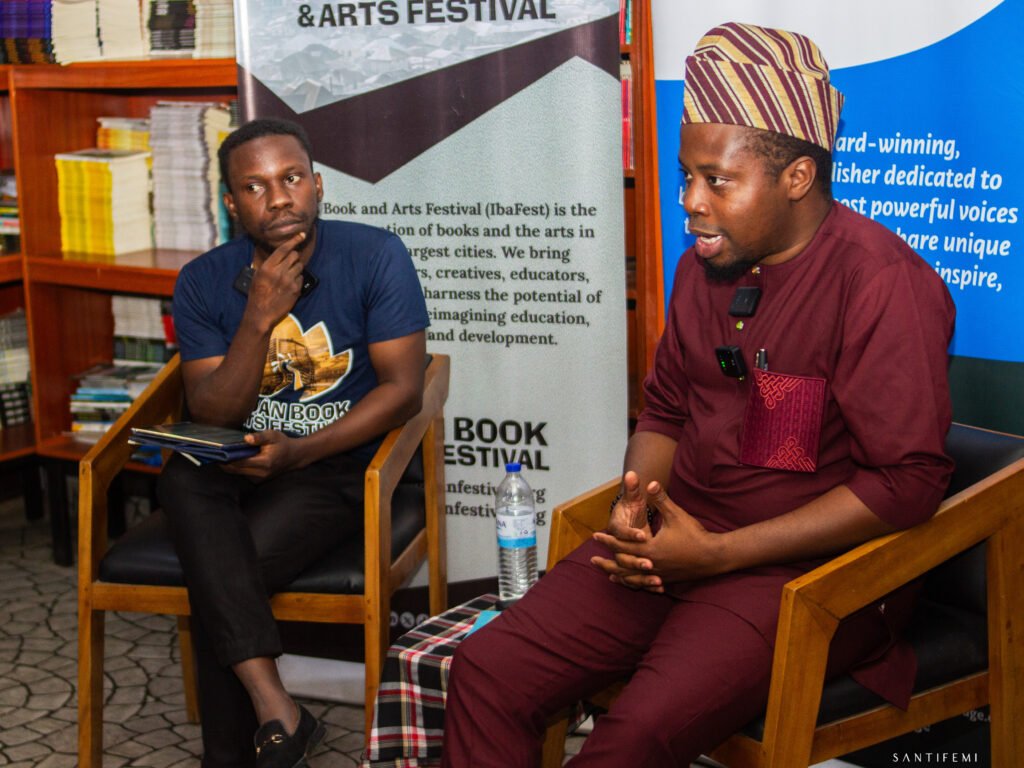
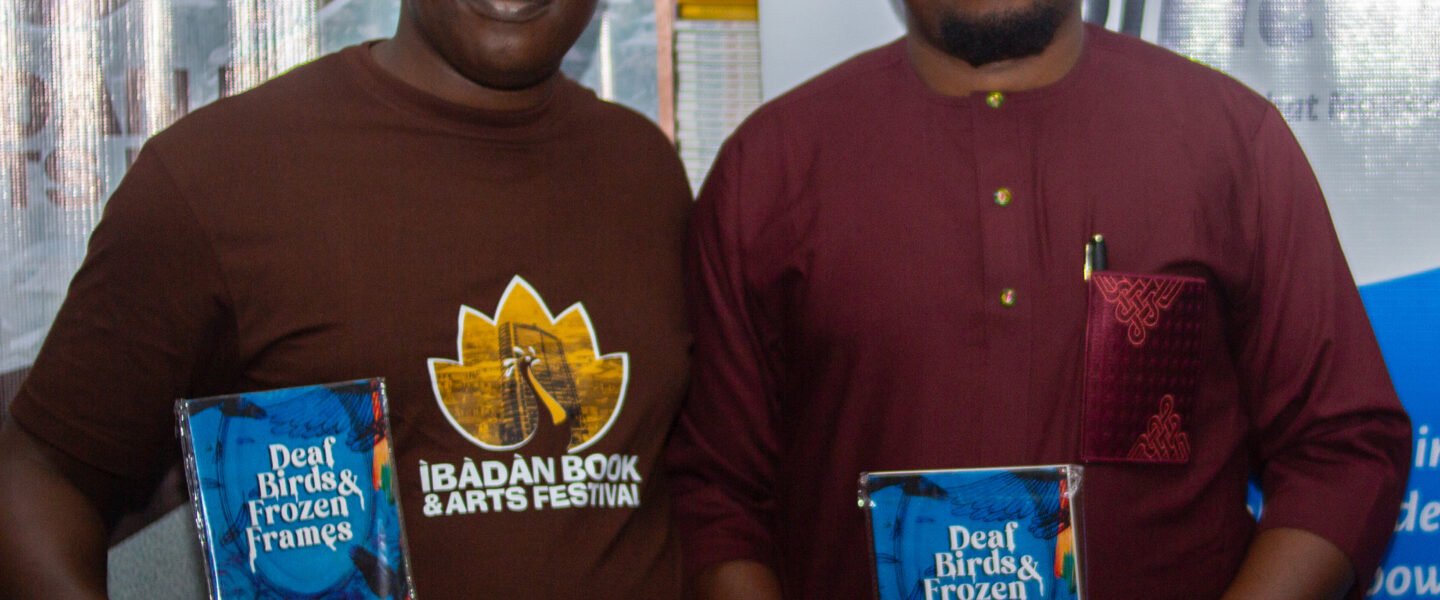
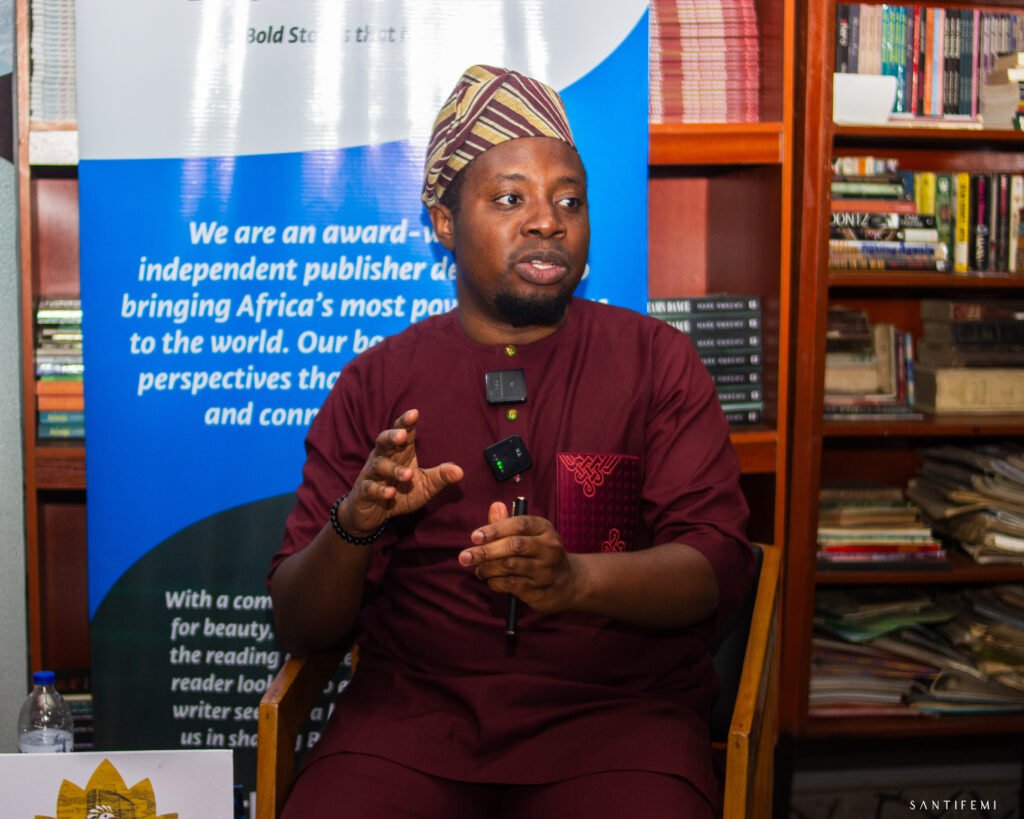
The Book Reading and Conversation with Sodiq Alabi hosted by Noirledge Publishing in partnership with Sevhage, was held on the 21st of August 2025. The event preludes the inaugural Ibadan Book and Arts Festival (IBAFEST) scheduled to hold on the 24th and 25th of October 2025; a festival that intends to bring together poets, scholars, literary enthusiasts to celebrate literary works and arts. It was a memorable evening where the poet read excerpts from his collections, The Texture of Air and Deaf Birds and Frozen Frames.
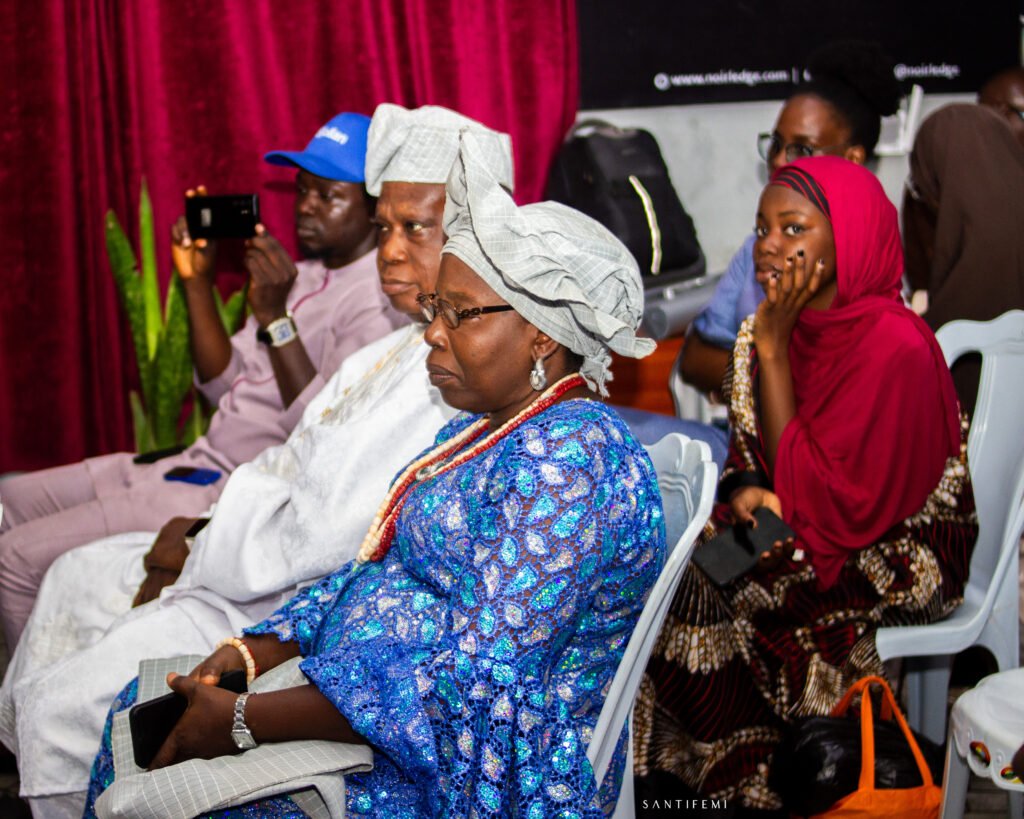
The event was graced by distinguished guests including High Chief Akeeb Adekunle Alabi and Princess Iyabode Serifat Alabi. It brought together poets, storytellers and literary enthusiasts.
The reading explored themes of displacement, migration, national consciousness, and identity, blending personal reflection with cultural heritage.
The opening poem “Displacement” captures the emotional complexities of migration/relocation. Alabi spoke about being away from home and how it was an emotional struggle when he left Nigeria. He reflects on the psychological toll that comes with migration and the challenges he faced when trying to adapt into a new system and culture.
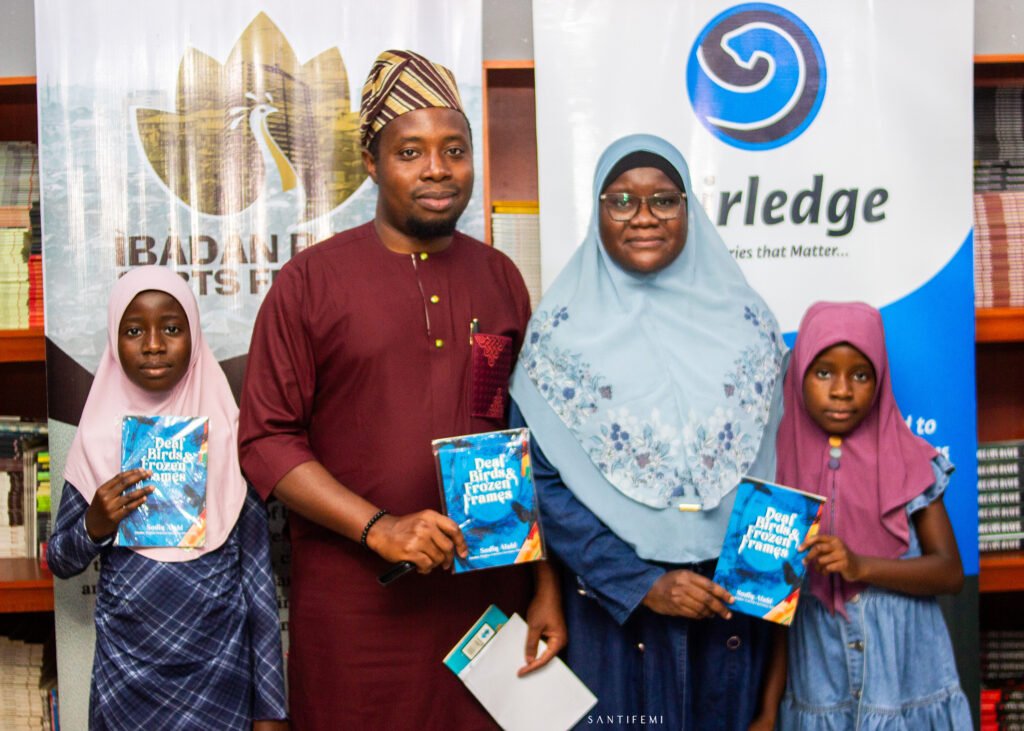
The second poem titled “What the Hunter Said” is drawn from his experiences in Iwo town. According to him, it is a poem from his debut collection The Texture of Air, he expanded the poem from his experiences in Iwo which is central to understanding the excerpt. He shed light on being a performance poet drawing from the rich Yoruba oral tradition in his early years, where his journey into poetry started at age 14 and how going back to Iwo in his thirties had brought beautiful memories and shaped his worldview.
Going forward into the reading, he read a poem titled “Life like British Weather” from his collection of poems, Deaf Birds and Frozen Frames. This poem compares life to British weather, showing how unpredictable and unstable life can be especially when living in a new environment.
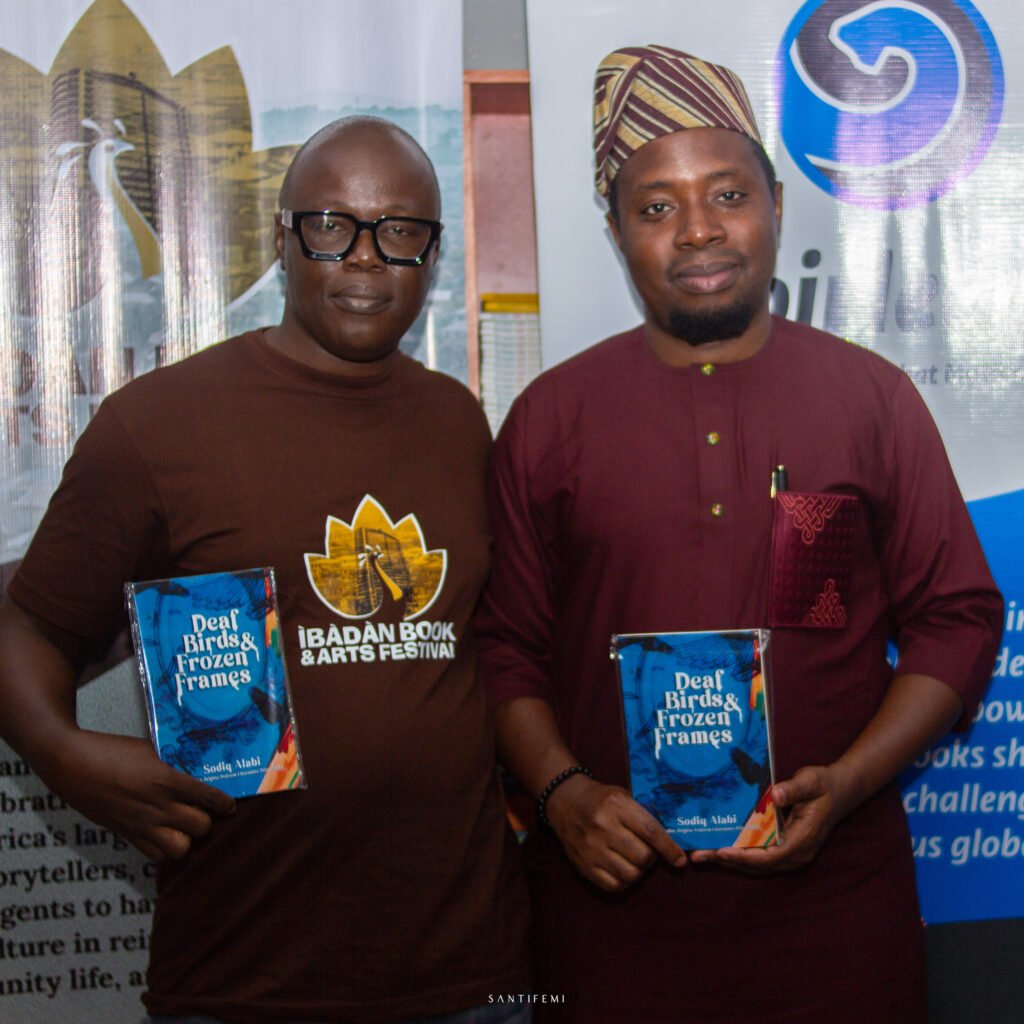
Alabi shared insight into his literary journey, how he began writing at age 17, with early works published by various newspapers. He recalls writing Texture of Air in 2015 and being inspired by the literary works of renowned writer, Prof. Wole Soyinka.
He spoke about his heritage from Iwo referencing the indigenes popular praise name “Omo Olodo Oba” and the legendary Oba River believed to have repelled invaders during historic Yoruba wars. He went further to talk about the influence of his grandmothers and maternal great grandmother who inspired his life and art greatly with their wisdom, shedding light on how their impact on his life has shaped him into who he is today.
Alabi emphasised the importance of staying connected to Nigeria regardless of wherever one finds him/herself in the world. In his words “Ask yourself: what can I do to help? Do it in your own way, so we do not lose the country”. Here he stressed the need for one to self-reflect on actions that can bring positive changes to our country Nigeria. He moved on to express frustration on the country’s current state. He further described his relationship with Nigeria as “complicated” because of the economic situation of the country. He identified as an expatriate, expressing how moving abroad felt like being on exile.
Alabi criticised the involvement of religious institutions in enabling poor leadership, noting that some religious leaders work together with political figures and are equally culpable for the country’s underdevelopment, he stressed the need for citizens to prioritise character and accountability when choosing leaders during elections.
He stated that his poetry collection, Deaf Birds and Frozen Frames is a metaphor for Nigeria, the leaders and how they turn deaf ears to the plight of the citizens. In his words “Nigerian leaders listen to the vibration of the drum and not the words of the music”.